As industry evolves, approaches to safety and engineering must evolve with it. The green transition is increasing the importance of automation, software and data, while placing greater demands on their reliability. At the same time, the ability to combine security, data and artificial intelligence is becoming a key competitive factor in the development of industrial production and automation.
Industry is undergoing a major transformation. The green transition, electrification, digitalization and the adoption of artificial intelligence are changing how production is designed, implemented and developed. At the same time, automation, software and data are becoming increasingly important, and industrial systems are being integrated into broader digital ecosystems. This development is increasing the complexity of technological environments and placing greater demands on their reliability.
As this transformation progresses, safety and security considerations are also broadening. Alongside traditional machinery safety, cybersecurity, data management and the use of artificial intelligence in production and automation systems have become increasingly important. As systems, software and data become more closely integrated into industrial processes, disruptions can have more far-reaching consequences than before. Cybersecurity must be addressed throughout the entire lifecycle as an integral part of production reliability, system maintainability and secure development, from initial design and maintenance through to continuous improvement. This development is also supported by the EU Cyber Resilience Act (CRA), which sets minimum requirements for products containing software and digital elements.
The potential of AI is evident in both production and automation engineering. AI can improve process efficiency while also assisting engineers with programming, testing and documentation. In both cases, realizing the benefits requires high-quality data, a unified technology architecture and secure operating practices.
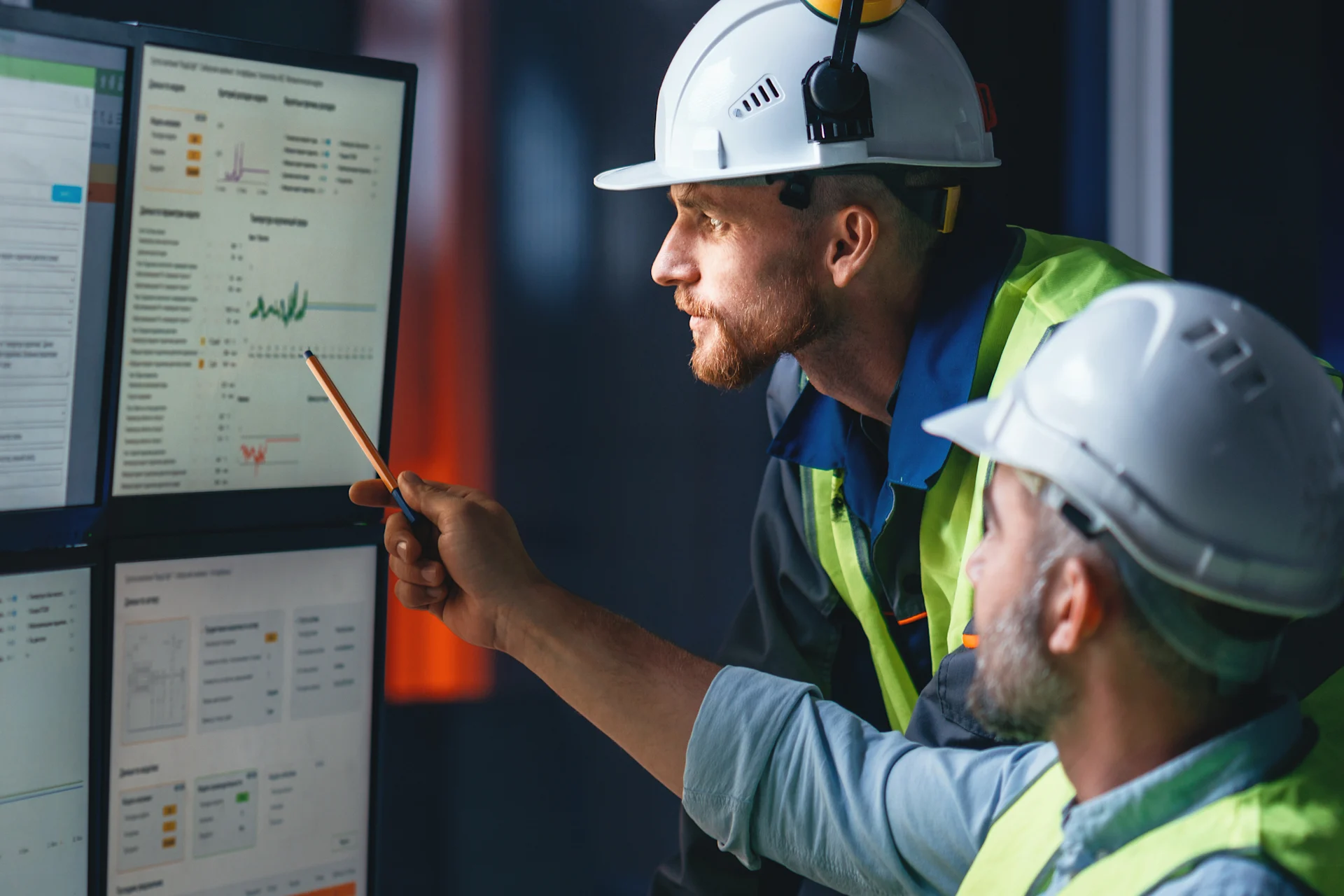
Integrating AI into production development
The goals of the green transition increasingly depend on the ability to use data effectively. Optimizing energy consumption, managing loads, improving material efficiency and continuously developing processes all require reliable, readily accessible information from every stage of production. Without high-quality data, the potential of AI remains limited.
The most visible element of an AI solution is often the model or application, but at industrial scale, the critical work takes place much earlier. Data generated by machines, equipment and production processes must be made available in a consistent, readily usable format. Otherwise, AI can easily remain an isolated application that is difficult to replicate, maintain and develop. Each new use case then requires its own integrations, data models and maintenance practices, causing the overall environment to become complex very quickly. The risk of flawed conclusions also increases if the available data lacks sufficient context to support decision-making.
Insta has several years of experience in harnessing industrial data. We have developed solutions that bring together data from different sources, transform it into a usable format, and make it available for data-driven decision-making, analytics, artificial intelligence and continuous improvement. When data is available in a consistent and controlled format, it can serve multiple purposes without the need to build a separate solution for each one.
Modern data platform and edge computing solutions provide a foundation for collecting, integrating and processing information close to the production process. They offer a controlled environment for deploying analytics and AI applications, while enabling new use cases to be built on a shared technical foundation. The benefits include faster deployment, greater scalability and easier maintenance.
However, a technology platform alone cannot solve the challenges of production development. Turning data into tangible value for business and production requires a deep understanding of processes, automation and the operating environment. As a lifecycle partner for industrial automation, electrification and digitalization, Insta integrates data, automation and technology platforms into real-world production environments.
AI also makes automation engineering more efficient
In addition to production optimization and analytics, AI can support the engineering of automation systems. Generative AI tools can assist with programming, testing, documentation and other time-consuming routine tasks, allowing experts to devote more time to system-level engineering and the development of customers’ production processes.
Siemens’ Eigen Engineering Agent brings AI into the TIA Portal engineering environment, helping to accelerate engineering work, standardize implementations and reduce manual effort throughout the automation lifecycle. For industrial companies, this can lead to high-quality implementations, greater project predictability and smoother deployment of new solutions.
Speed must not take precedence over quality assurance
The most important question in AI-assisted engineering is not simply how quickly code can be generated. What matters is whether the resulting solution works as intended and meets the specified quality and safety requirements.
Simulation, automated testing and digital twins provide an essential counterbalance to AI-generated solutions. Code and system functions can be verified in a virtual environment before deployment, allowing errors to be identified earlier and reducing risks during commissioning.
AI does not remove the responsibility of a skilled engineer. Professionals remain responsible for defining objectives and requirements, evaluating outputs, understanding the system as a whole, and ensuring its safety and correct operation. At its best, AI supports expert work, but it does not replace professional judgement.
Competitive advantage comes from the whole
Industrial electrification, digitalization and the green transition are increasing the need to use data, automation and AI across ever broader systems and environments. At the same time, more stringent requirements are being placed on system security, reliability and maintainability.
The use of AI is no longer an isolated technology experiment. It is becoming an integral part of the long-term development of production, energy solutions and automation. Competitive advantage comes from the ability to combine high-quality data, modern automation systems, security and AI into a coherent whole.
The key is to strike the right balance between efficiency, reliability and security. When data, automation and AI reinforce one another, production can be developed more sustainably and predictably, even in a rapidly changing operating environment.
Article also published in Automaatioväylä magazine (in Finnish)