Insta delivered a reliable and redundant automation system for Heinola Water Utility. The project introduced a modern control room solution that enables seamless remote monitoring of water treatment facilities, wastewater pumping stations and other utility sites. In addition to modernizing the wastewater treatment plant automation, the project renewed the communication networks used by remote monitoring systems across clean water facilities and wastewater pumping stations. The result was a modern, scalable and standardized automation platform that is easy to maintain and support throughout its lifecycle.
Heinola Water Utility provides water services for local residents and businesses. The utility is responsible for producing high-quality drinking water, maintaining water distribution networks and treating wastewater efficiently while protecting local waterways and the environment.
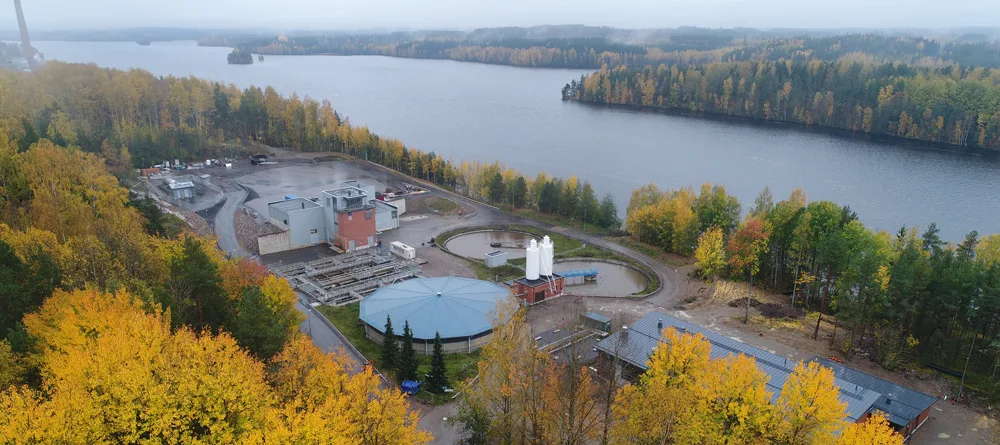
The Sahanniemi wastewater treatment plant in Heinola was originally commissioned in 1976 as a chemical treatment facility. In 1996, it was upgraded into a dual-line biological-chemical activated sludge treatment plant. Today, the facility treats wastewater generated by approximately 21,000 residents.
The treatment plant had last undergone a major renovation in the 1990s. Stricter environmental permit requirements, the age of the facility and the decision to also process landfill leachate created the need for a major modernization and expansion project launched in spring 2018.
The completed upgrade included the expansion of aeration basins, renewal of sludge dewatering systems and construction of a methanol dosing facility. At the same time, machinery, instrumentation, electrical systems and automation were modernized, while various refurbishment works were carried out throughout the plant.
User-focused modernization and greater operational efficiency
According to Sami Savonen, Electrical Engineer at Heinola Water Utility, the objective was not only to update the treatment process to meet today's stricter requirements but also to improve usability and maintainability from the operators' perspective.
“The project was carried out in close cooperation with Insta, and our personnel were able to contribute their ideas and requirements throughout the process. Operating the process is now significantly easier compared to the previous system.”
In autumn 2018, the wastewater treatment plant automation renewal began. The entire process automation system was replaced as part of a comprehensive modernization project.Insta's delivery included:
A new redundant control room system
InstaWahti software and reporting workstations
iPad tablets for operators and maintenance personnel
A duplicated GSM alarm forwarding system to improve reliability
The project also included the modernization of local automation systems at clean water facilities and wastewater pumping stations. Communication networks were upgraded using radio and 4G technologies, providing a modern foundation for remote monitoring and control.
From the central control room, operators can now monitor all water utility sites across Heinola. Using iPads, on-call personnel can remotely supervise wastewater treatment processes and operate both clean water and wastewater monitoring functions.
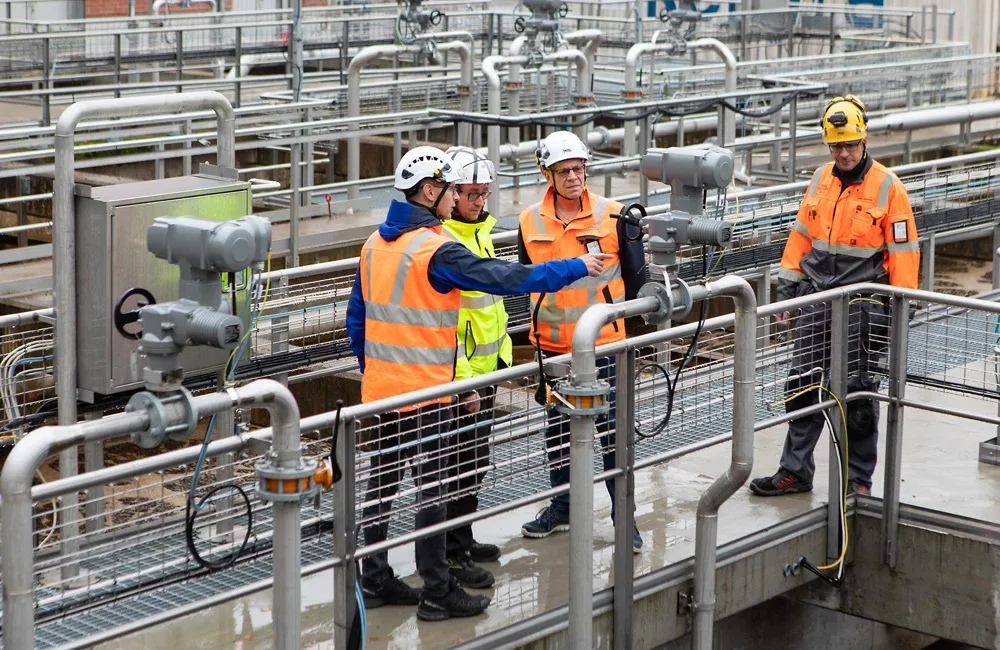
The wastewater treatment plant automation was also expanded to cover lime preparation and dosing, sludge reception and stormwater pumping station automation. During the aeration basin expansion, the entire aeration control process was redesigned and upgraded using modern process control technologies.
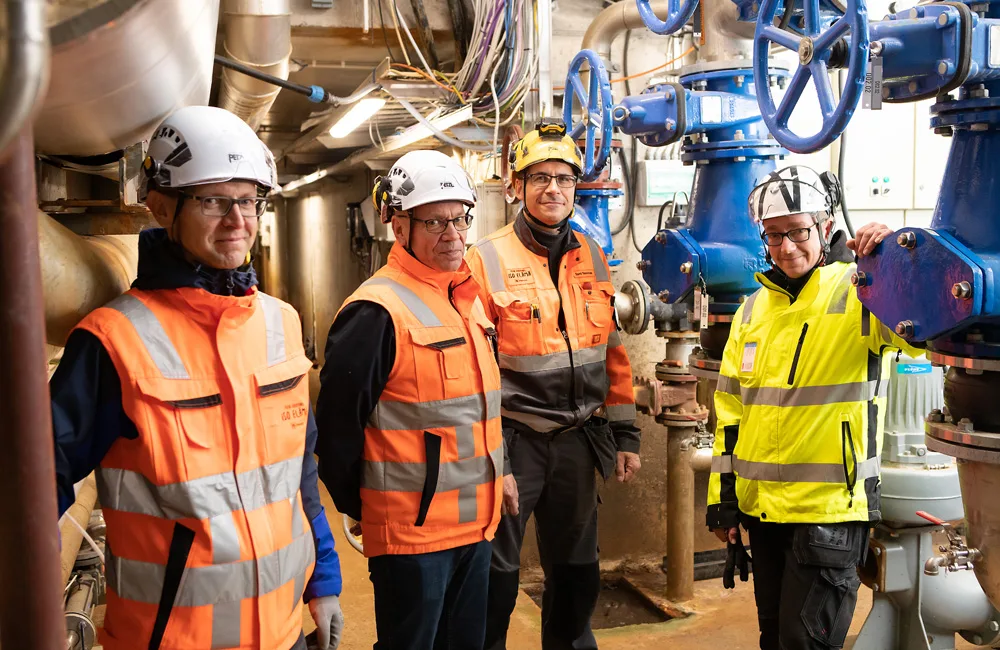
The aeration basins are now equipped with a modern process control system. From left to right: Water Services Engineer Tomi Lahti, Wastewater Treatment Plant Operations Engineer Jake Nylund, Construction Manager Ari Matteinen, and Electrical Engineer Sami Savonen.
Radio towers, remote monitoring and local automation delivered on an accelerated schedule
Once the wastewater treatment plant modernization was underway, Heinola Water Utility identified a need to renew the communication links used by the remote monitoring systems serving clean water facilities and wastewater pumping stations.
The existing remote monitoring system relied on a copper cable network that had reached the end of its lifecycle. In addition, the service provider responsible for maintaining the connections was discontinuing the service, which would have left utility sites without communication links. As a result, the modernization needed to be implemented on a tight schedule. Work began with the facilities that were most critical to water distribution reliability.
The modernization project covering water intake facilities, elevated water reservoirs, local automation systems and remote monitoring infrastructure was launched in September 2019. Despite the challenges of building a radio and 4G communications network in hilly terrain, the new remote monitoring system was commissioned within six months.
Although the schedule was demanding, the project also focused on improving lifecycle sustainability and operational reliability. Electrical switchboards and variable frequency drives were renewed alongside the automation upgrades.
According to Sami Savonen, many of Heinola’s clean water facilities had been built at different times and were essentially unique in their technical implementation. As a result, the project required considerably more investigation and engineering work than would typically be needed in newer facilities built according to standardized designs.
Several additional improvements were implemented during the modernization. Local operating modes were added to clean water facilities to help secure water distribution during exceptional situations. Pressure measurements were introduced across the drinking water network, improving condition monitoring and enabling faster identification of potential leaks.
In addition, all facilities were equipped with modern automation-controlled network disinfection functionality that can be activated whenever required.
Operators can now easily select the desired dilution level and chemical dosing parameters through the automation system.
“These improvements have significantly enhanced process controllability and overall operational management,” says Savonen.
Other benefits include improved security through intrusion alarm systems integrated into the automation platform as well as cost savings achieved through more accurate chemical dosing.
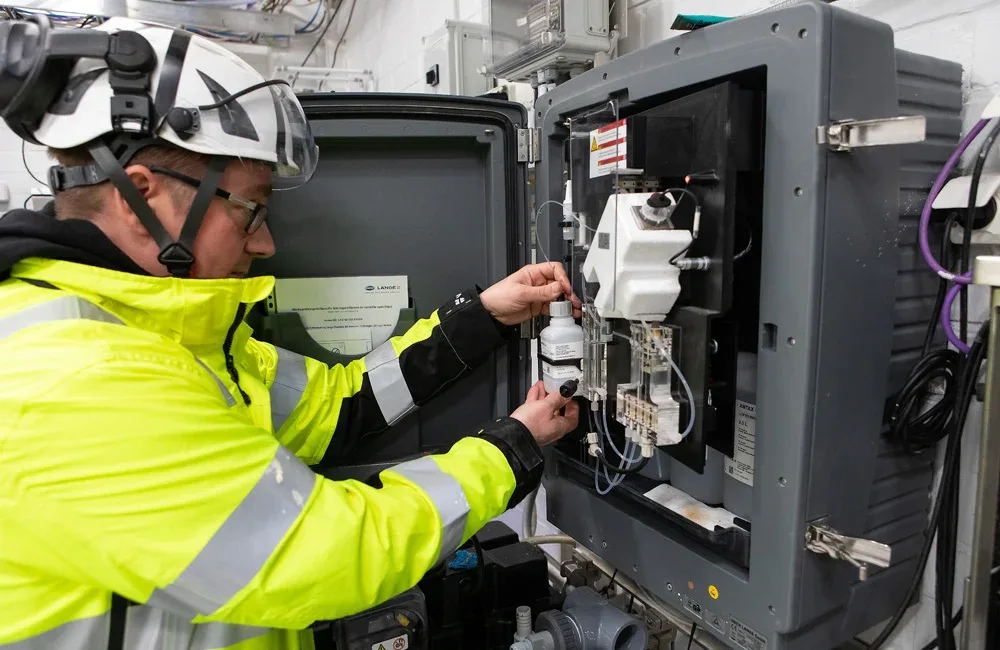
Wastewater Treatment Plant Operations Engineer Jake Nylund performing inspection and maintenance work at the Heinola wastewater treatment plant.
“There is no need to settle for an average solution”
The next phase of the project focused on modernizing remote monitoring and local automation for wastewater pumping stations.
The long-term objective is to connect all 60 wastewater pumping stations in Heinola to the new remote monitoring platform. At the time of the project, the rollout was approximately halfway complete. The pumping stations were equipped with independent backup operating modes designed to prevent wastewater overflows in exceptional situations.
The plan also includes bringing clean water booster stations into the automation and remote monitoring system, after which the partnership will continue through automation maintenance and lifecycle services.
As the project progressed, all automation solutions used throughout Heinola’s water services operations were standardized. In addition to defining the desired functionality of each pumping station, special attention was paid to maintainability. Standardized solutions simplify spare parts management, maintenance work and future system development.
“In many of the older facilities, the legacy electrical and automation documentation no longer reflected the actual situation. During the modernization project, the documentation was updated to match the current installations,” Savonen explains.
Savonen describes the cooperation with Insta as highly professional and solution-oriented.
“The cooperation has been excellent, even though the project has included its share of challenges. Whenever issues arose, they were solved together immediately, allowing the project to move forward efficiently.”
“Insta does not settle for the easiest solution simply to move things forward. Instead, the work is carried through as far as possible to achieve the best result. We did not have to settle for an average solution. Everything was implemented as well as possible with today’s knowledge and technology.”
“We now have a modern and easily expandable system that provides a strong foundation for the future and helps us meet increasingly demanding operational and regulatory requirements.”
Learn more
Explore Insta's water services automation and monitoring solutions.
Water SupplyLearn more about Insta’s comprehensive project delivery capabilities.
EIA turnkey deliveries