Insta carried out the process automation contract for the Kakolanmäki wastewater treatment plant, which was excavated inside the bedrock. Since then, the partnership has continued through lifecycle services and maintenance of the automation systems. Turun seudun puhdistamo, which operates according to sustainable development goals and continuously develops its treatment processes, values Insta’s expertise, operational reliability, and lifecycle management.
Turun Seudun Puhdistamo Oy is a wholesale company providing wastewater treatment services and is owned by 14 municipalities. The company is responsible for operating the Kakolanmäki wastewater treatment plant — excavated inside the bedrock — and ensuring its treatment performance. The Kakolanmäki plant is one of the most modern wastewater treatment facilities in Finland, processing the wastewater of nearly 300,000 residents in the Turku region as well as local industries. The plant receives approximately 90,000 cubic metres of wastewater per day for treatment.
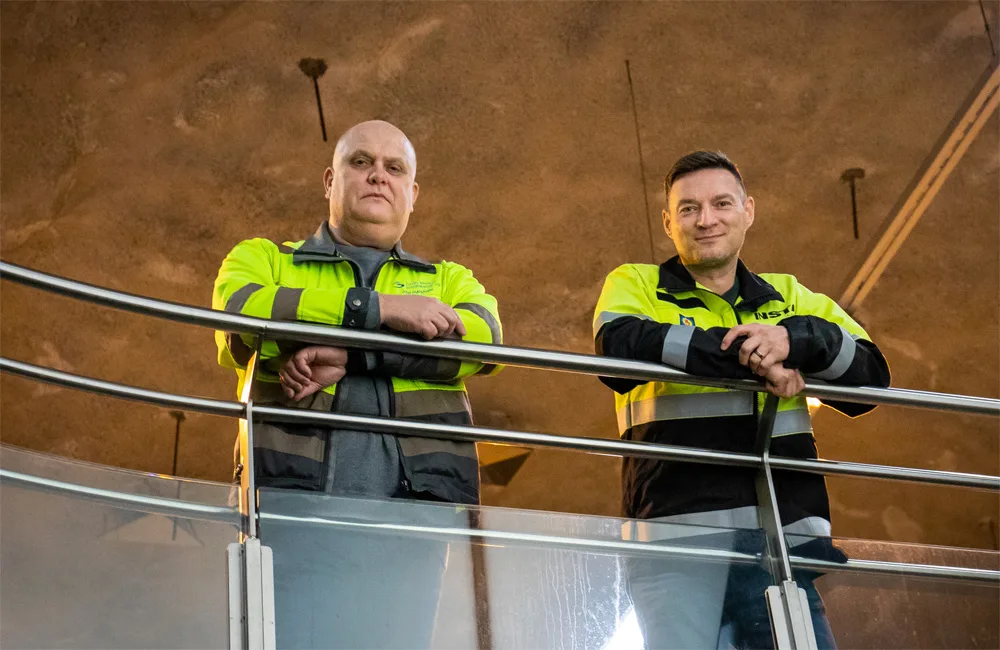
A modern treatment plant excavated inside the Kakolanmäki bedrock
The decision to build the Kakolanmäki wastewater treatment plant was made in 1999. In May 2004, excavation work began in Turku, carving out a 471,000‑cubic‑metre rock cavern close to the city centre for the plant. The Kakola prison, located in historically valuable buildings above the site, presented its own challenges for the excavation. Special attention was paid to the nearby urban environment and to the wastewater discharge point located within the inner archipelago. Above ground, an administration building and a slip‑formed exhaust air stack were constructed. The treatment plant was commissioned in 2009.
Insta Automation was selected to deliver the process automation contract for the rock‑cavern treatment plant through a price and quality competition. The full delivery included design (automation system configuration, instrumentation, control cabinets, fieldbus solutions, and data communications), automation system programming, cabinet manufacturing, installations, commissioning, training, and equipment supply. The project, the largest water‑utility automation delivery in Finland at the time, required approximately 126 person‑months of automation and instrumentation work.
Automation Manager Jyrki Haapasaari, responsible for electronic information systems and their maintenance and development, says that the automation solution incorporated technologies not previously used at wastewater treatment plants. The plant wanted, for example, a DCS‑level automation system, and fieldbus technology was utilised as extensively as possible in instrumentation.
"We felt that a DCS‑level system would be easier to manage and offers significant expansion potential," Haapasaari explains. "In addition, our plant has a large number of actuated valves, many of which are pneumatic, whereas water utilities have traditionally relied more on electric valves. These were important considerations for us from an automation standpoint, and we feel we succeeded with them."
Four pumping stations and several measurement stations were integrated into the remote‑control system. The project also included chemical treatment for bypass waters. The system was complemented with process camera monitoring as well as a presentation and information display system for visitors.
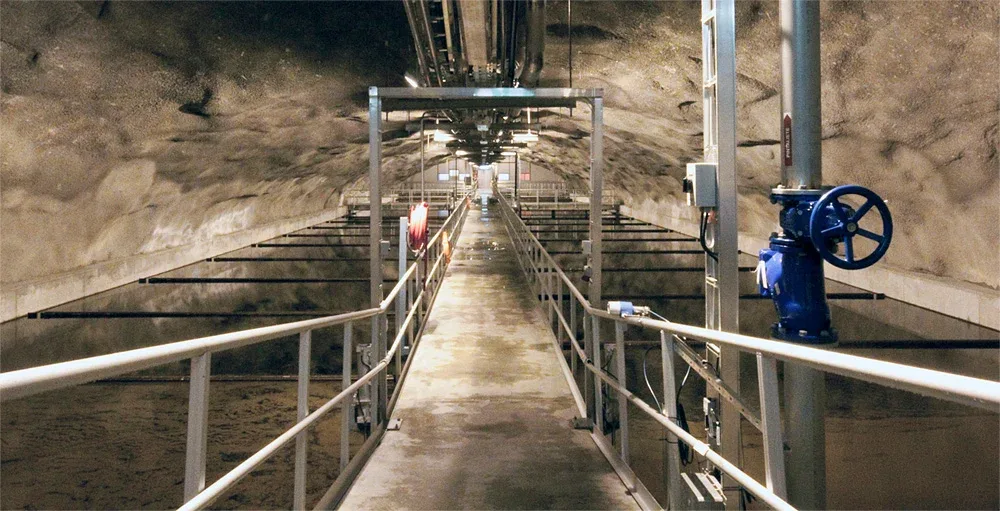
Safety, continuity and sustainable development as key objectives
The operations of the Kakolanmäki wastewater treatment plant are continuously developed, with particular attention paid to environmental aspects — especially energy consumption. The plant also prioritizes comfort and safety, and for example, the lighting inside the rock cavern is exceptionally good. Haapasaari notes that lighting plays a significant role in workplace well‑being, and explains that, to reduce energy use, the luminaires have been replaced with long‑lasting, energy‑efficient LED lights.
Turun Seudun Puhdistamo participates in the joint Baltic Sea Challenge of Helsinki and Turku, through which the cities have carried out dozens of concrete measures to reduce waterway loading. Partners who have joined the network launched by the city mayors have also taken action to improve the condition of local waters and the entire Baltic Sea. Turun Seudun Puhdistamo incorporates the goals of the Baltic Sea Challenge into its strategy and develops both the treatment plant’s operations and, for example, industrial risk management related to water use. Thanks to the facility’s performance, the water quality in the maritime area off Turku has improved significantly.
Turun Seudun Puhdistamo operates in line with the UN Sustainable Development Goals. Its projects emphasize environmental friendliness, operational reliability, and lifecycle considerations. For example, sludge separated in the treatment process is used to produce biogas for district heating, and the heat pump plant connected to the facility recovers heat energy bound in wastewater for district heating and produces district cooling.
A ten‑year maintenance agreement streamlines work and strengthens continuity
Jyrki Haapasaari explains Turun Seudun Puhdistamo’s operating model by noting that the company’s own personnel focus on managing, operating and developing wastewater treatment, while support services are sourced from reliable partners.
Turun Seudun Puhdistamo and Insta have a ten‑year maintenance agreement, which Haapasaari feels has streamlined the progress of maintenance and development activities. ‘Insta brings specialized expertise to our organization in the maintenance and servicing of the process automation and cybersecurity system. The service we receive is highly professional, and their work has built trust,’ Haapasaari says.
The plant’s operations are developed according to a lifecycle plan. Automation has a clearly defined role in the overall process — equipment lifecycles and system updates are carried out according to the lifecycle plan, which is reviewed annually. The review provides the basis for budget planning. By replacing equipment according to plan, unexpected failures can be avoided, process reliability improved and continuity strengthened.
"Continuity management and preparedness are very important to us. During the annual review, we assess not only the development needs related to process automation but also discuss the state of cybersecurity, completed measures and ongoing development," Haapasaari explains.
Risk management at Turun Seudun Puhdistamo is developed as a continuous process. This also includes cyber‑exercises conducted together with Insta Digital. "We have organised two cyber exercises facilitated by Insta Digital and received excellent service," Haapasaari notes, referring to a cybersecurity training workshop arranged for the staff. The workshop, organised in cooperation with the Cybersecurity Centre, was supported with their expertise.
Responsive on‑call services, even from afar
When asked about the use of digitalisation in lifecycle services, Haapasaari mentions the cloud‑based iA‑Support service used by Turun Seudun Puhdistamo, developed specifically for maintenance‑agreement customers. The plant has used the service to submit work orders to Insta and to monitor ongoing tasks and projects.
A few years ago, Turun Seudun Puhdistamo switched from its previous reporting software to the InstaWahti reporting platform for maintenance‑related reasons. Haapasaari adds that discussions have recently taken place about adopting InstaWahti Focus, which refines system data into an even more readable and analysable format.
Remote connections have been important not only during the exceptional past year but also as part of Insta’s normal on‑call service for maintenance‑agreement customers. Haapasaari gives Insta special praise for this: "Even though you operate from another city more than a hundred kilometres away, this has never been an issue for on‑call support. Our standby personnel can rely on receiving help also in the evenings, at night and on weekends. We have not often faced situations requiring contact, but whenever needed, we have received excellent support. The commitment and flexibility of the staff have been clearly visible to us as a customer," Haapasaari notes.