Viking Line upgraded the passenger vessel M/S Viking Grace to utilize wind assisted technology as part of its efforts to improve energy efficiency and reduce emissions. Insta supported the project by providing electrical safety and power system expertise related to the integration of modern rotor sail technology.
Published 18 April 2018. Updated 16 April 2026.
M/S Viking Grace became the world’s first passenger vessel to operate with wind‑assisted propulsion in commercial service. The installed rotor sail is 24 meters high and four meters in diameter. Its operation is based on the Magnus effect, a well‑established physical principle in maritime applications. When exposed to wind, the rotating composite cylinder creates a pressure differential that generates thrust, supporting the vessel’s forward motion. The system operates automatically and is designed to shut down if wind direction or strength becomes unfavorable from an operational or safety perspective.
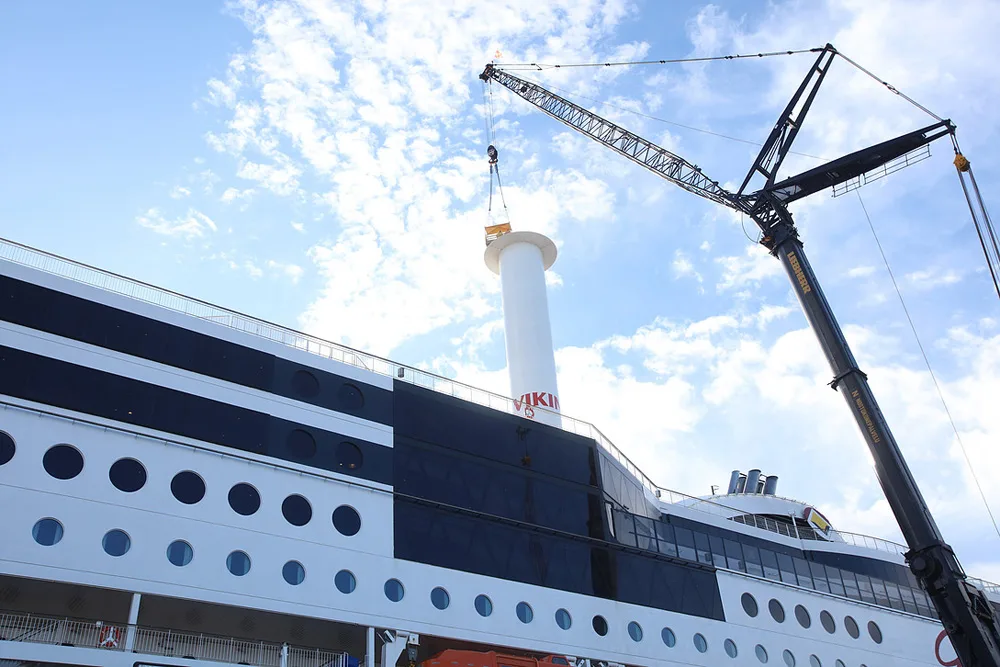
Although the underlying principle of rotor sails dates back nearly a century, Norsepower spent several years developing the technology to meet modern maritime, safety and classification requirements. In today’s regulatory and environmental context, wind‑assisted propulsion has re‑emerged as a practical means of reducing fuel consumption and carbon dioxide emissions in commercial shipping. By lowering the load on the vessel’s main engines, the rotor sail contributes to improved energy efficiency without compromising reliability or safety.
As part of the project, Insta carried out arc flash energy calculations for the electrical systems associated with the rotor sail installation. The calculations were performed in accordance with classification society requirements and support the safe design, operation and maintenance of the vessel’s power distribution systems.
Insta specializes in electrical design, power system analysis and electrical safety services for the marine industry, industrial environments and critical infrastructure. Arc flash energy calculations are used to assess risks related to short‑circuit‑induced arc faults, particularly in live working environments, and to define appropriate safety distances and personal protective equipment requirements.

Kalle Vuorio
Profit Center Manager, Energy Distribution Insta Automation firstname.lastname (at) insta.fi