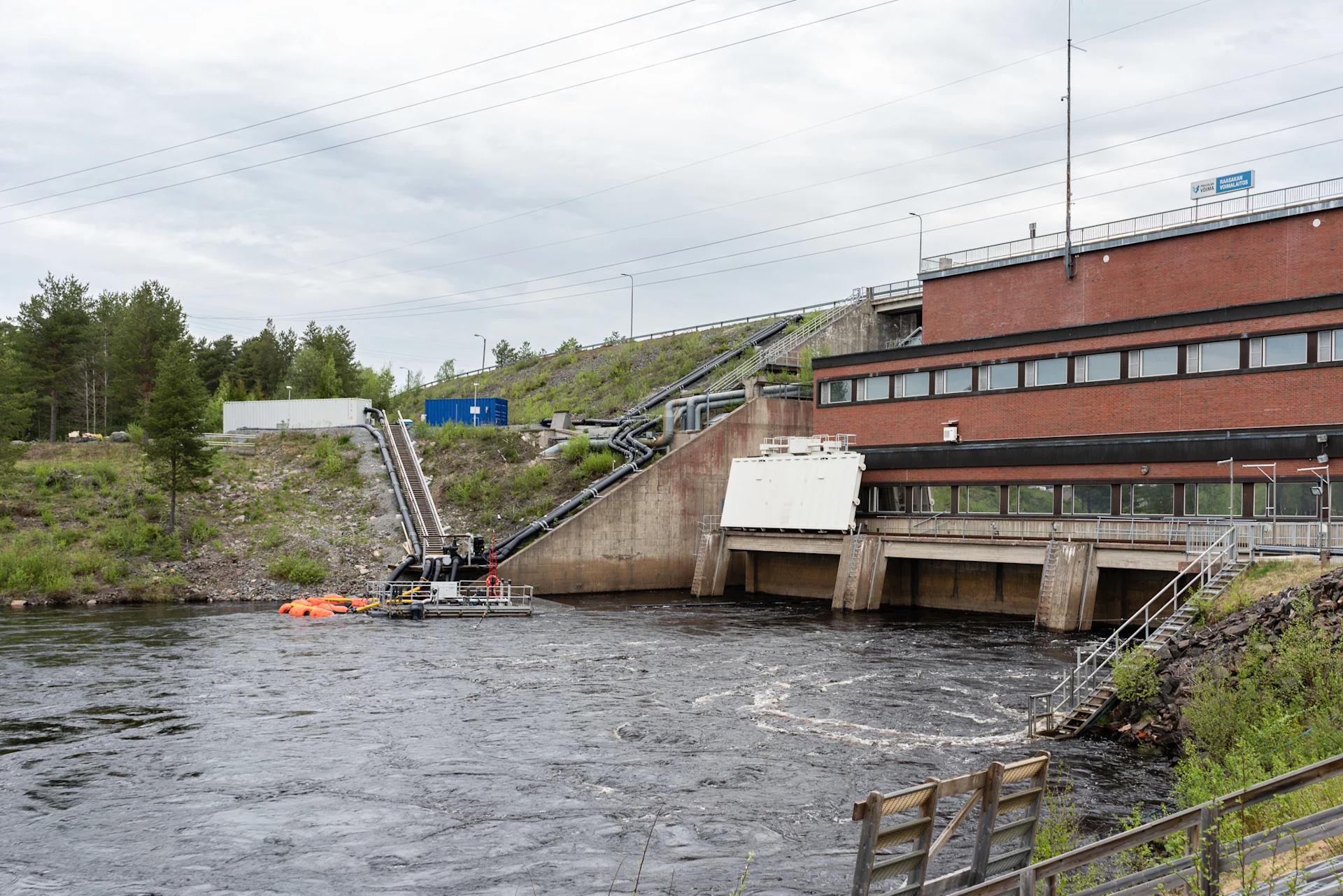
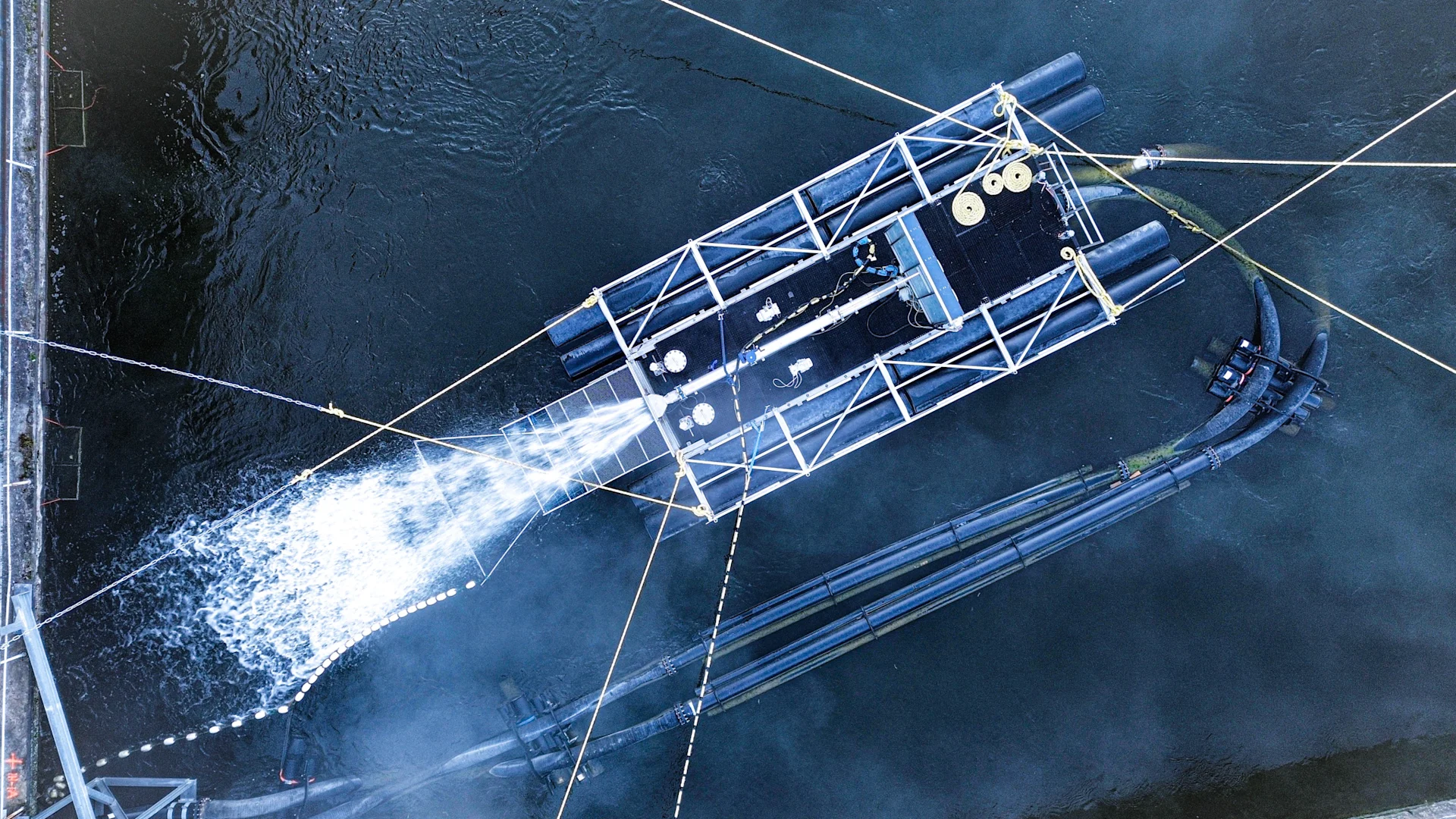
The Fishheart system, developed by Rovaniemi-based inventor Tarmo Aittaniemi, provides migratory fish with a safe passage past hydropower plants. The system is based on the siphon principle, where water flow and pressure differences are utilized to transfer fish from below the dam to the upstream reservoir.
Hydropower companies Kemijoki, PVO-Vesivoima, Fortum, UPM and Helen have supported the development work. As international growth and system scalability advanced, the role of automation became critical. Insta and Siemens enabled system standardisation, global support, and long-term development.
A cost-efficient solution that leaves no scar on nature
A large share of Finland’s original salmon stocks has disappeared due to river damming and water construction. While dams produce valuable renewable electricity, they prevent migratory fish from reaching their natural spawning grounds upstream in the spring, and juvenile fish cannot migrate downstream to lakes or the sea. Solutions such as fishways, including fish ladders and fish lifts, have been developed, but these require investments of tens of millions of euros from energy companies.
Fishheart offers a significantly more cost-effective and resource-efficient solution for transferring fish.
“The solution is approximately 70–80 percent more affordable than fish ladders and 90–95 percent more affordable than fish lifts. The water consumption of Fishheart is only about 5 percent of that of traditional fishways, so it has minimal impact on hydropower production capacity”, explains Marko Karsikko, CEO of Fishheart.
Another advantage of Fishheart is that the system is movable and does not require modification of the environment. As Karsikko puts it: if the solution is removed, it leaves no scar on nature. The system can be deployed only for the fish migration season, after which it can be removed and serviced.
The system also does not require fish to have the strength to swim against the current all the way.
"Unlike traditional fishways that rely on bypass flows, Fishheart is suitable for all species. We can also transfer species such as lamprey, eel and whitefish", says Samuli Ukkola, IT and Automation Manager at Fishheart.
Artificial intelligence identifies fish species and collects data
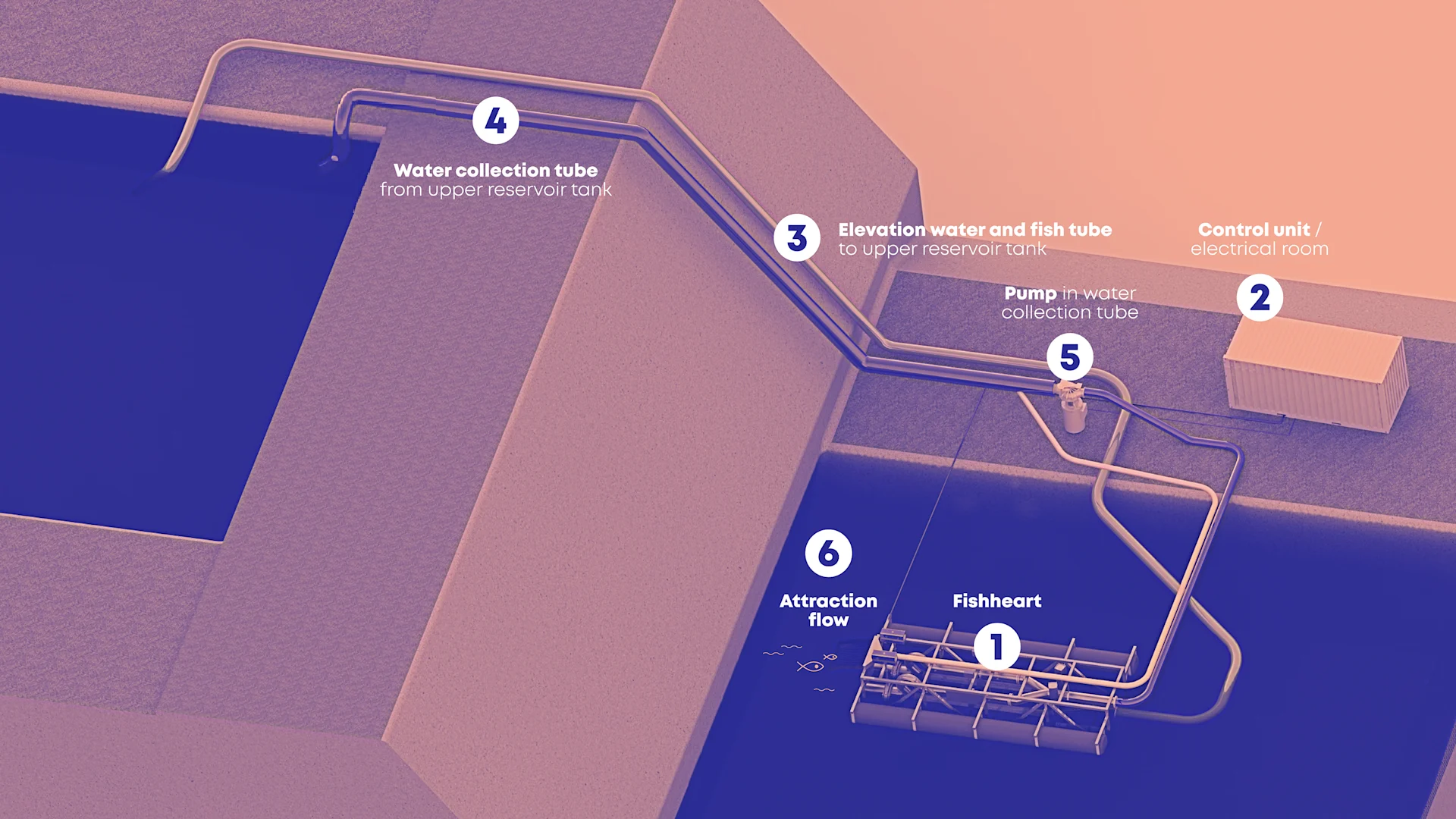
As its name suggests, the Fishheart system is based on two “chambers”, resembling a heart, and consists of a unit installed downstream of the dam and two pipes running over the dam.
The system uses attraction flow to guide fish into a pipe and directs them through it past the dam, while water flows in the opposite direction in the other pipe. The fish remain in the centre of the 40-centimetre-diameter pipe due to centrifugal force, and the transfer does not harm them. Fishheart can transfer thousands of fish per hour.
Hydropower plants operating in the EU have obligations to maintain biodiversity in river ecosystems and ensure that a certain percentage of migratory fish can move upstream each spring. The Fishheart system produces valuable data on the condition of waterways and fish populations, supporting ecological water management and reporting to authorities.
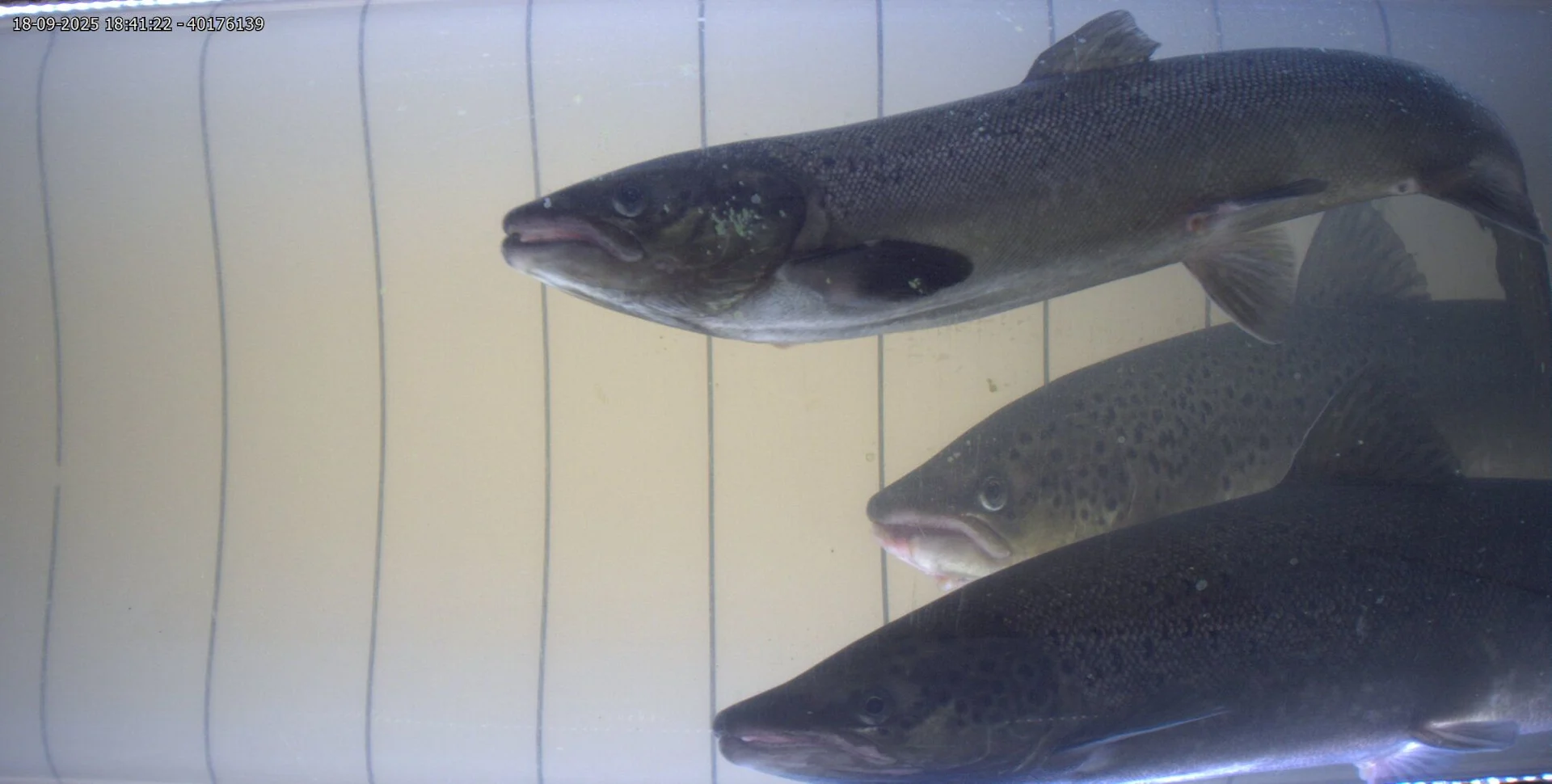
Ukkola explains how the system photographs every fish that enters it and, using artificial intelligence developed by the company, measures and classifies it. This provides hydropower plants with real-time data on the number, species, size and other characteristics of passing fish.
"We can also direct fish into a separate container for research purposes or separate harmful species. We also have a solution for safely transferring smolts, i.e. juvenile salmon or trout, downstream", Ukkola says.
A scalable, globally supported automation solution enables standardisation across markets
Fishheart initially developed the system independently through pilot customers in Finland, the United States, Canada and Australia. Once the process functionality had been proven and it was time to scale production, Fishheart contacted Insta, a Siemens Solution Partner.
"Automation plays a critical role in the device, so reliability was our top priority when selecting partners. We wanted to build a robust and scalable solution with expertise available worldwide", Karsikko says.
"Together, we developed a properly dimensioned automation solution for Fishheart using Siemens technology. The solution is cost-efficient and can be utilised well into the future, says Jouni Huotari", Business Area Director at Insta.
"Our development cooperation provides a strong platform for growth. Insta and Siemens can help us standardise the solution for different markets", Karsikko concludes.
The automation implemented by Insta and Siemens enables remote monitoring, data collection and easy system maintenance—the system can be operated remotely, and maintenance needs are minimal. A unified automation solution harmonises spare part requirements and simplifies competence management, which is important as the system expands internationally.
Fishheart’s solution is now ready for global expansion. Thanks to Fishheart, hydropower plants and migratory fish no longer have to be mutually exclusive.
"We support the use of hydropower, as it is an efficient way to produce renewable energy. Thanks to Tarmo’s invention, dams no longer need to be dismantled", Karsikko concludes.
Text: Päivi Lukka, Siemens & Tiina Suvanto, Insta
Pictures: Siemens / Okko Sorma ja Fishheart / Jan-Peter Pohjola